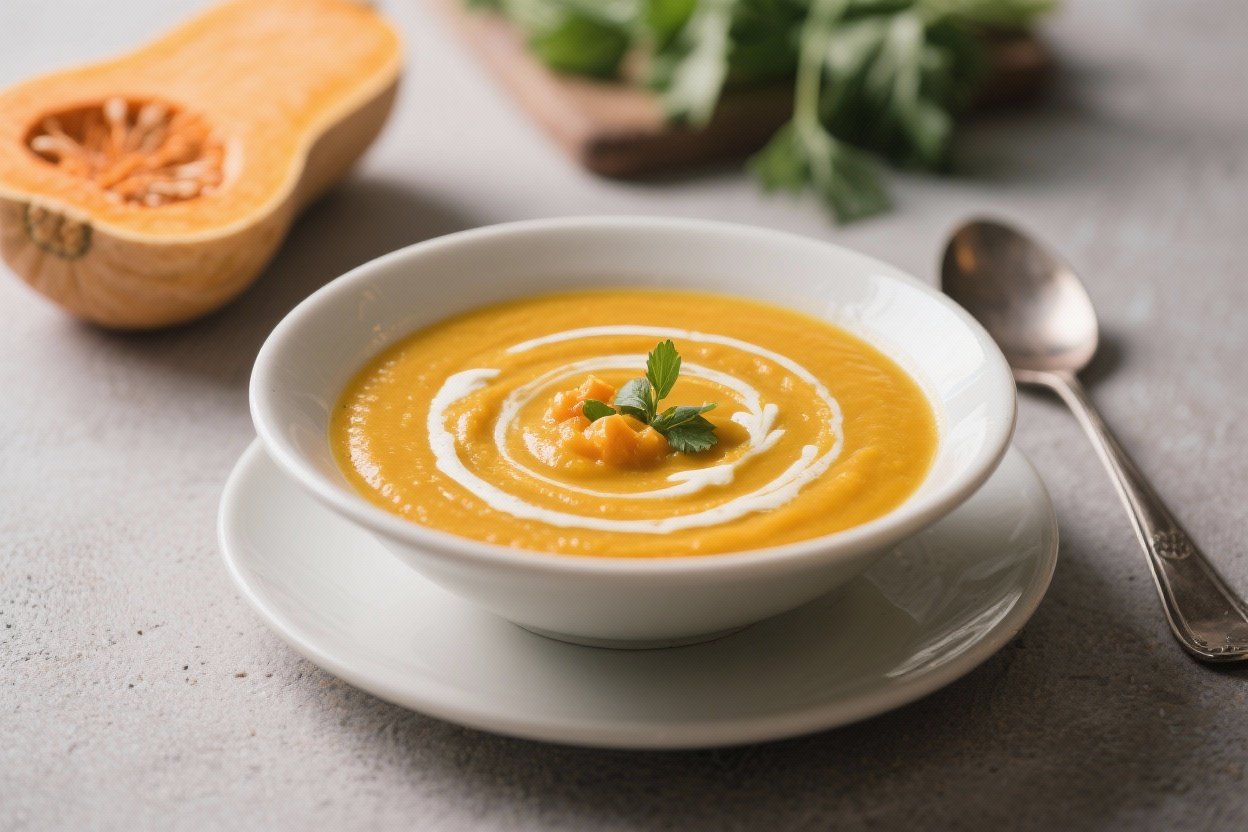
Healthy Butternut Squash Soup for Clean Eating Beginners: The Cozy Bowl That Makes You Feel Like You’ve Got Your Life Together
You don’t need a private chef or a trust fund to eat clean—you just need one pot and a squash. This soup is the kind of meal that makes your kitchen smell like you’ve been “on your wellness journey” for years, even if you just Googled how to dice an onion. It’s creamy without cream, hearty without heaviness, and cheap enough to feed a crowd without a single coupon.
Make it once, and suddenly you’re that person who meal preps, hydrates, and remembers to stretch. Not bad for a blender and a few pantry staples, right?
Why You’ll Love This Recipe
- Beginner-proof: Simple steps, minimal dishes, and zero culinary gymnastics.
- Ultra-creamy texture without dairy—thank the squash and a humble blender.
- Clean ingredients with no weird additives, just whole foods you can pronounce.
- Budget-friendly and scalable: make a double batch and win at lunches all week.
- Customizable flavor: go sweet, spicy, or herby depending on your mood.
What You’ll Need (Ingredients)
- 1 large butternut squash (about 2.5–3 lbs), peeled, seeded, and cubed
- 1 medium yellow onion, chopped
- 2 medium carrots, chopped
- 2 cloves garlic, minced
- 1 tablespoon fresh ginger, grated (or 1/2 teaspoon ground)
- 2 tablespoons olive oil or avocado oil
- 4 cups low-sodium vegetable broth (or chicken broth if not vegetarian)
- 1/2 teaspoon ground turmeric
- 1/2 teaspoon ground cinnamon (optional, for warmth)
- 1/4–1/2 teaspoon red pepper flakes or cayenne (optional, for heat)
- 1 bay leaf
- Salt and black pepper to taste
- Juice of 1/2 lemon (or 1–2 teaspoons apple cider vinegar)
- Optional toppings: plain Greek yogurt or coconut milk swirl, pumpkin seeds, chopped parsley or cilantro
Step-by-Step Instructions
- Prep your squad. Peel and cube the butternut squash into roughly 1-inch pieces. Chop onion and carrots, mince garlic, and grate ginger.
The smaller you cut, the faster it cooks—no need to show off, though.
- Sweat the aromatics. Heat oil in a large pot over medium. Add onion and carrots with a pinch of salt. Cook 5–7 minutes until softened and fragrant, stirring occasionally so nothing gets moody and burns.
- Flavor base, activated. Add garlic, ginger, turmeric, cinnamon, and red pepper flakes.
Stir for 30–60 seconds until your kitchen smells incredible. If it smells “too incredible,” you waited too long—add broth quickly.
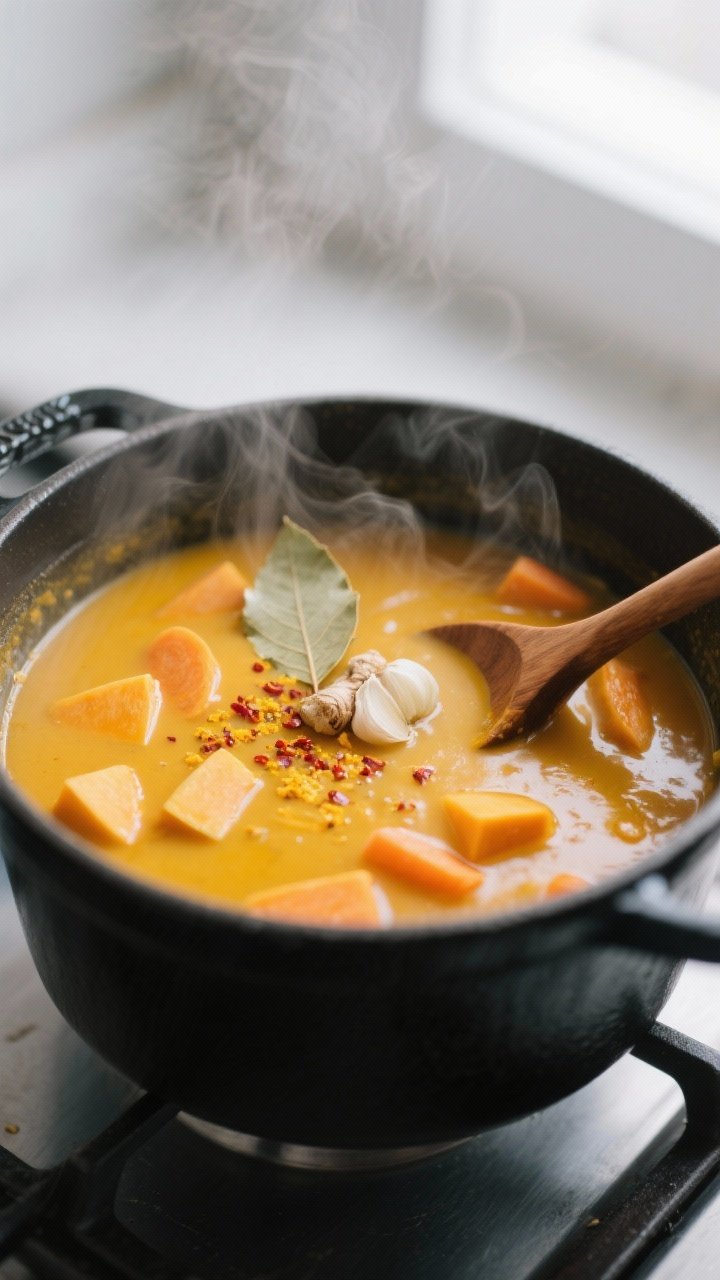
- Build the body. Add squash cubes, bay leaf, and broth. The liquid should just cover the veggies; add water if needed.
Bring to a boil, then reduce to a simmer.
- Simmer to tender bliss. Cook 18–22 minutes, until the squash is fork-tender. Remove and discard the bay leaf. Pat yourself on the back for patience.
- Blend it smooth. Use an immersion blender directly in the pot until silky.
Or carefully transfer to a blender in batches, venting the lid slightly. Safety note: hot soup plus sealed blender equals soup volcano. Don’t do that.
- Finish the flavor. Stir in lemon juice, then season with salt and black pepper.
Taste and adjust: more heat? More acid? A pinch more cinnamon for cozy vibes?
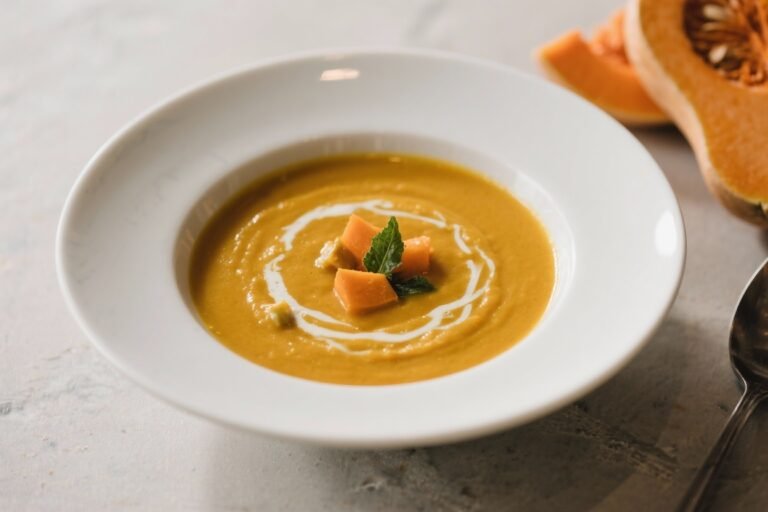
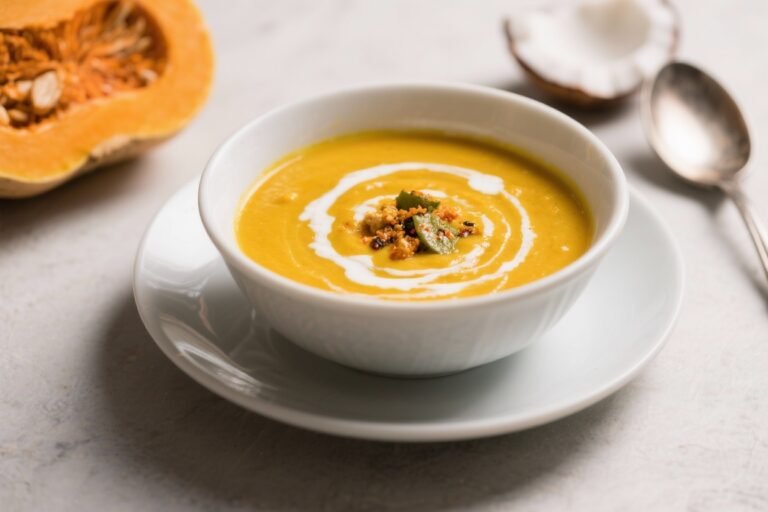
- Optional richness. For extra creaminess, swirl in a tablespoon of Greek yogurt or a splash of coconut milk.
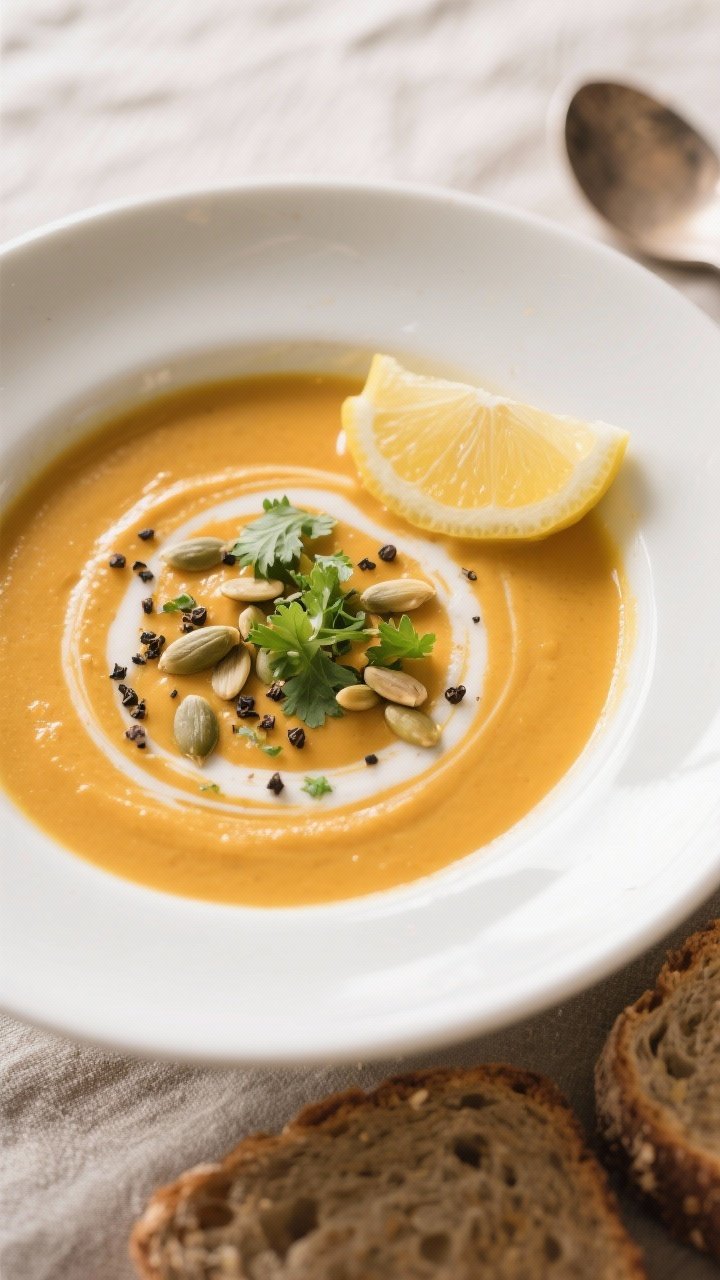
Garnish with pumpkin seeds and herbs if you’re feeling fancy.
- Serve hot. Pair with a slice of whole-grain toast, roasted chickpeas, or a simple salad. Then pretend this was difficult and accept compliments graciously.
How to Store
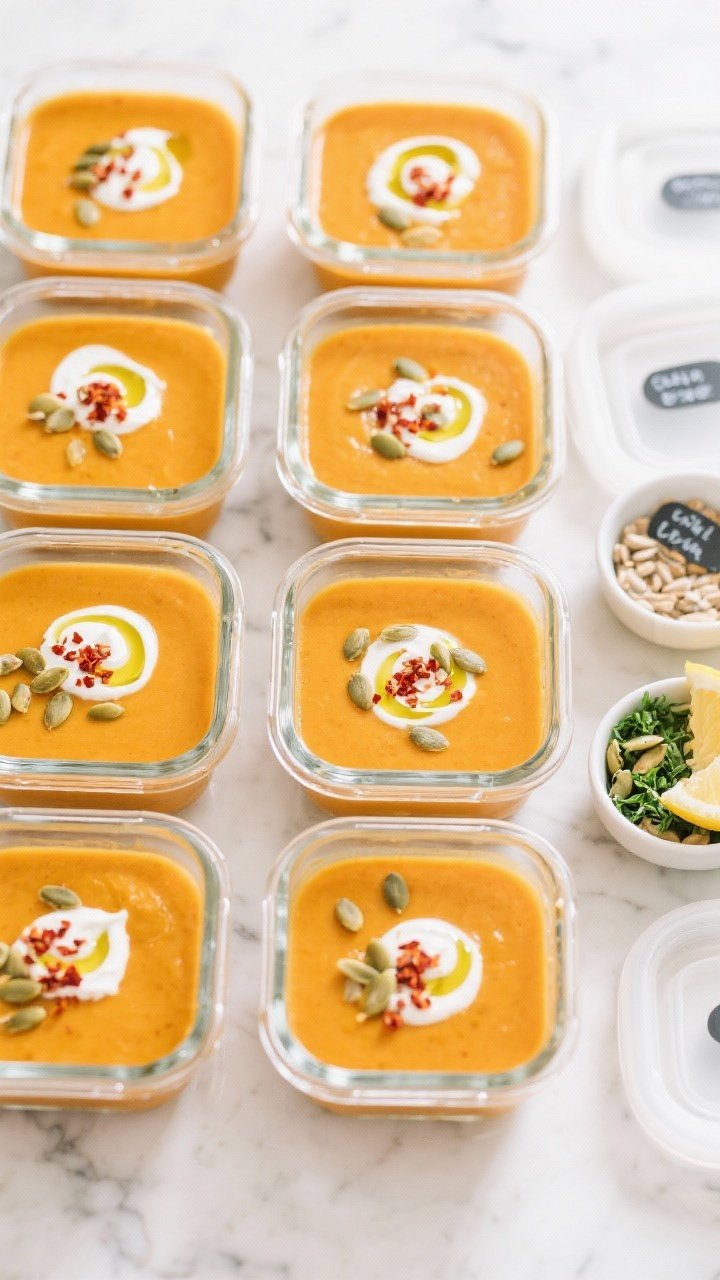
- Fridge: Cool completely, then store in airtight containers for up to 5 days. It thickens as it rests—just thin with a splash of broth or water when reheating.
- Freezer: Freeze in portioned containers or freezer bags for up to 3 months.
Lay bags flat for space-saving convenience. Label it—future you will forget, guaranteed.
- Reheat: Warm on the stove over low heat, stirring occasionally. Microwave works too; cover to avoid Jackson Pollock-style splatters.
Health Benefits
- High in fiber: Butternut squash and carrots provide soluble fiber that supports digestion, balanced blood sugar, and satiety.
Translation: fewer snack attacks.
- Loaded with antioxidants: Beta-carotene, vitamin C, and turmeric help combat oxidative stress and support immune function.
- Mineral support: Potassium in squash helps regulate fluid balance and blood pressure. Your heart says thanks.
- Clean, controlled calories: Naturally low in fat and modest in calories, especially without cream. You get comfort food without the “nap required” aftermath.
- Anti-inflammatory ingredients: Ginger and turmeric bring gentle anti-inflammatory properties—subtle, not magic, but helpful.
Pitfalls to Watch Out For
- Undercooked squash: If it’s not fully tender, you’ll get a gritty texture.
Simmer until a fork slides in easily.
- Over-thick soup: If it’s puree-thick, add more broth or water 1/4 cup at a time until sippable by spoon. IMO, slightly thinner beats paste-like.
- Blender blowouts: Vent the lid and blend in batches. Wrap a towel over the lid if using a standard blender.
Your ceiling will appreciate it.
- Skipping acidity: Lemon or vinegar brightens the flavor and keeps it from tasting flat. Don’t skip the squeeze.
- Salt shy syndrome: Low-sodium broth is great, but you still need enough salt to wake up the flavors. Season at the end and taste-test.
Alternatives
- Roasted version: Roast the squash, onion, and carrots at 425°F with oil and salt for 25–30 minutes before simmering.
Deeper flavor, slightly more time.
- Thai-inspired: Add 1–2 tablespoons red curry paste and use coconut milk for part of the liquid. Finish with lime and cilantro.
- Apple twist: Add 1 peeled, chopped apple with the squash for a gentle sweetness. Great with cinnamon and a hint of nutmeg.
- Protein boost: Stir in cooked red lentils (1/2–1 cup) during simmering, or top with roasted chickpeas.
Keeps you full longer.
- Spice swap: Try cumin and coriander for earthy depth, or smoked paprika for a subtle BBQ vibe. FYI: a little goes a long way.
- No butternut? Use kabocha, acorn, or sweet potatoes. Texture and sweetness vary slightly, but all work beautifully.
FAQ
Can I make this without a blender?
Yes.
Mash with a potato masher for a rustic texture, or use a food mill. It won’t be ultra-smooth, but the flavor still slaps.
Is this soup vegan and gluten-free?
It’s naturally gluten-free. Keep it vegan by using vegetable broth and skipping dairy-based toppings (use coconut milk or olive oil drizzle instead).
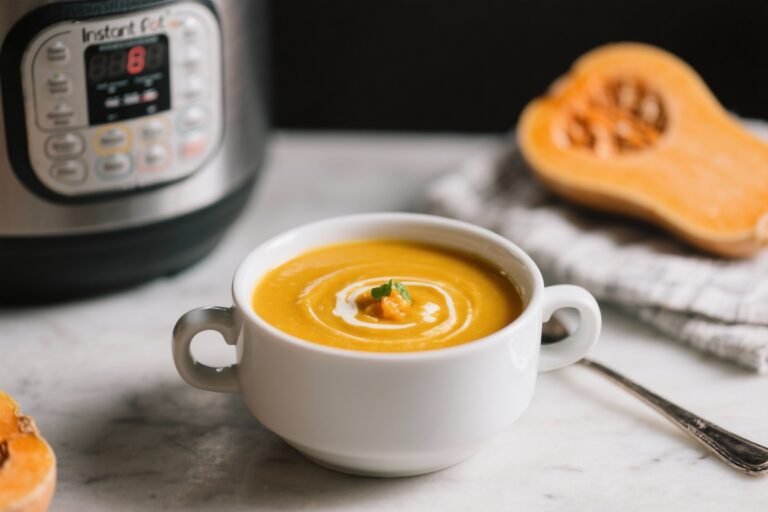
Can I make it in a slow cooker or Instant Pot?
For slow cooker, add everything except lemon and cook on low 6–7 hours or high 3–4, then blend and finish with lemon.
For Instant Pot, pressure cook 8–10 minutes with a quick release, then blend and season.
How do I peel a butternut squash without losing my mind?
Trim the ends, cut the neck from the bulb, peel each section with a sharp peeler, then halve and scoop seeds. Cut into planks, then cubes. Or buy pre-cut—no judgment.
What can I serve with this to make it a full meal?
Add a protein on the side: grilled chicken, baked tofu, or a chickpea salad.
Whole-grain toast, quinoa, or a simple kale salad rounds it out nicely.
Can I use frozen butternut squash?
Absolutely. It’s a time-saver and blends smoothly. You may need slightly less simmer time since it softens quickly.
How do I make it creamier without dairy?
Blend in 1/2 cup coconut milk, or add a small cooked potato during simmering.
Both give lush texture with zero cream.
What’s a good garnish that isn’t fussy?
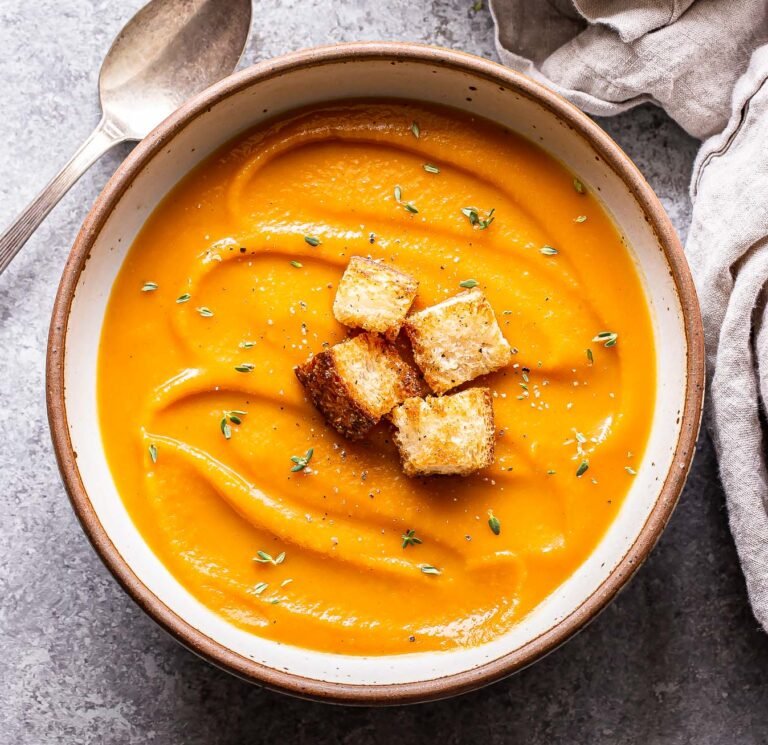
Try a swirl of yogurt or coconut milk, toasted pumpkin seeds, and a crack of black pepper. Chopped parsley or cilantro adds fresh color with minimal effort.
The Bottom Line
This Healthy Butternut Squash Soup for Clean Eating Beginners is the rare combo of easy, affordable, and actually delicious. It’s a one-pot path to cozy comfort, packed with nutrients and flexible enough to suit almost any palate.
Make a batch, stash some in the freezer, and enjoy the smug satisfaction of having a wholesome meal ready whenever life gets chaotic. Your future self is already high-fiving you.
Printable Recipe Card
Want just the essential recipe details without scrolling through the article? Get our printable recipe card with just the ingredients and instructions.