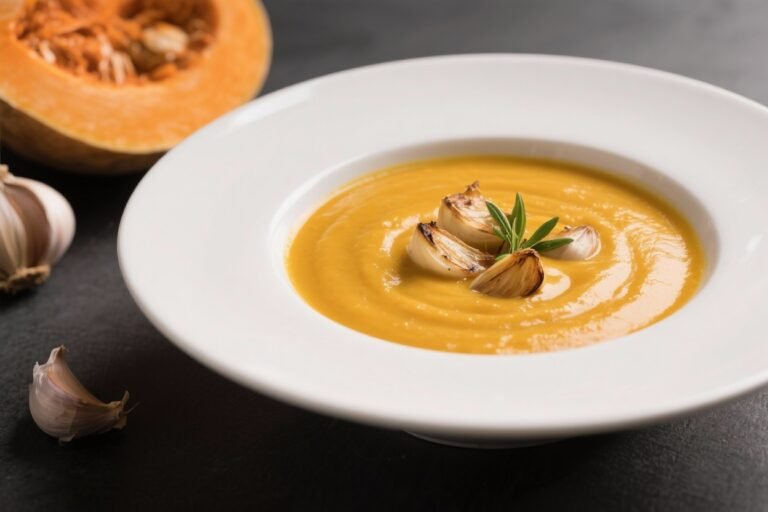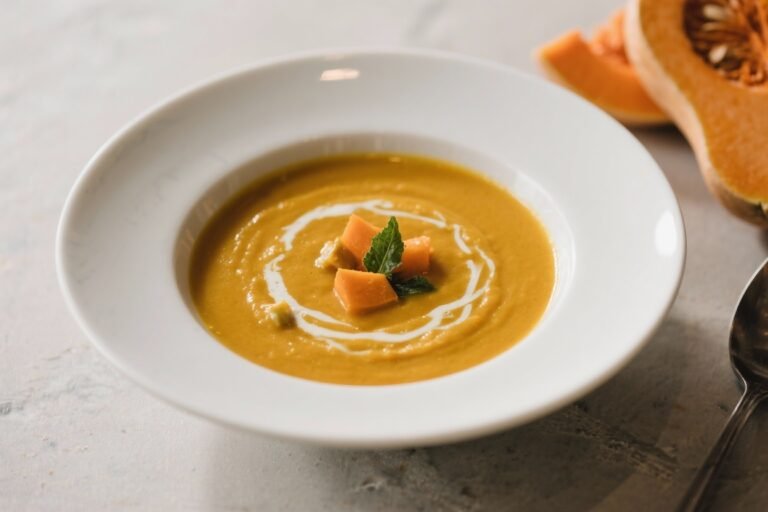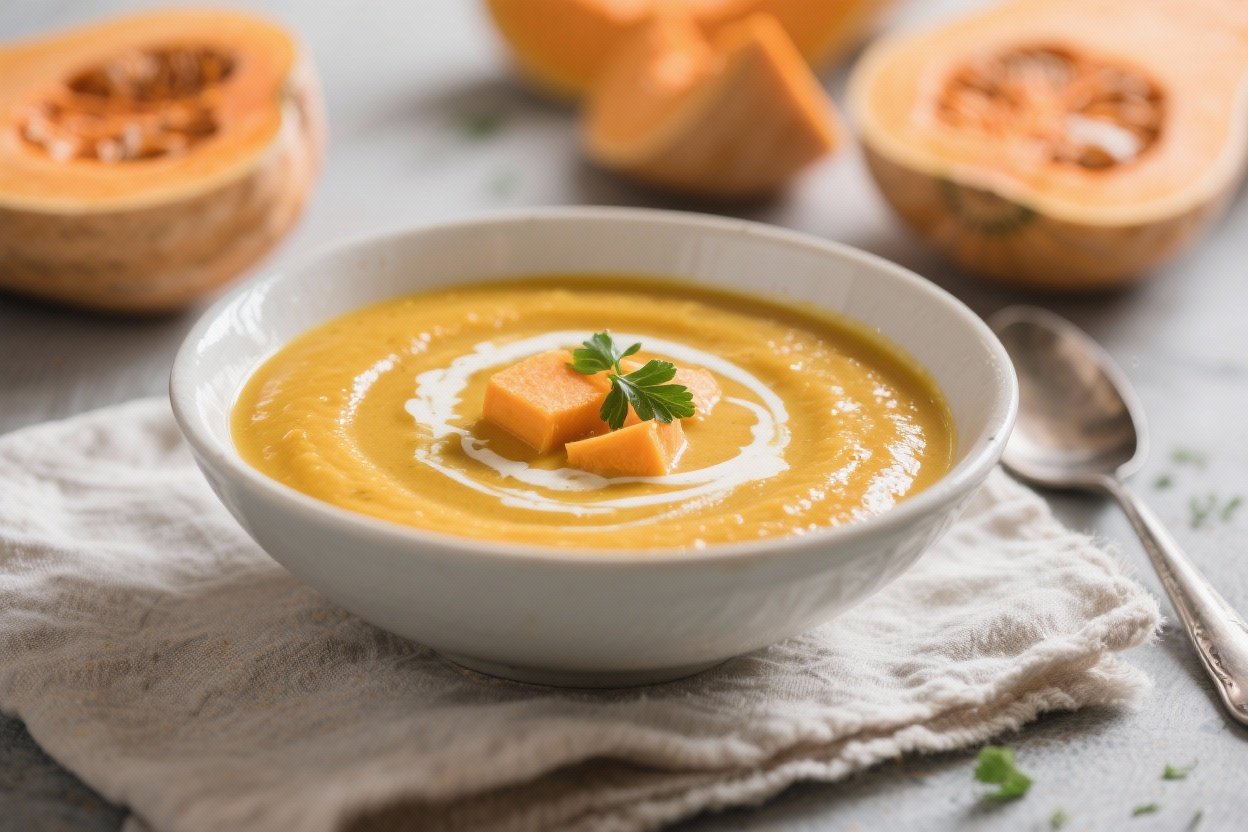
How to Make Butternut Squash Soup from Scratch (Beginner-Friendly) — The Cozy Bowl That Converts Skeptics
You know those nights when you want something that tastes luxurious but requires the skill level of “I can chop an onion”? This is that. Butternut squash soup is creamy, rich, and ridiculously comforting without a grocery-list flex or culinary gymnastics.
It’s budget-friendly, beginner-proof, and tastes like you spent the day slow-cooking when you actually didn’t. Ready to impress yourself (and anyone lucky enough to show up)?
The Secret Behind This Recipe
This soup succeeds because it layers flavor in three simple moves: caramelization, aromatics, and balance. Roasting the squash concentrates its natural sweetness and gives it a lightly toasted depth.
Sautéed onion, garlic, and a touch of carrot or apple add complexity, while a hit of acid (lemon or vinegar) toward the end keeps things bright, not baby-food bland. Finish with broth and a splash of cream or coconut milk for silky body. That’s the playbook.
Ingredients Breakdown
- Butternut squash (1 large, about 3–3.5 lbs) – The star; sweet, nutty, and roasts like a champ.
- Olive oil (2–3 tbsp) – For roasting and sautéing; flavor and caramelization booster.
- Yellow onion (1 medium) – Base aromatics for savory depth.
- Garlic (3–4 cloves) – Because soup without garlic is just sadness in a bowl.
- Carrot (1 medium) or apple (1 medium, like Honeycrisp) – Optional, but adds natural sweetness and body.
- Vegetable or chicken broth (4–5 cups) – Start with 4, add more to adjust thickness.
- Salt and black pepper – Season generously; the squash can handle it.
- Ground cinnamon (a pinch) and/or nutmeg (a pinch) – Optional warm spices; go light.
- Fresh thyme (2–3 sprigs) or 1 tsp dried – Herbal lift.
- Red pepper flakes (optional, 1/4 tsp) – For a gentle kick.
- Cream or coconut milk (1/3–1/2 cup) – Adds silkiness; dairy-free if using coconut.
- Acid: lemon juice (1–2 tsp) or apple cider vinegar (1 tsp) – Brightens everything at the end.
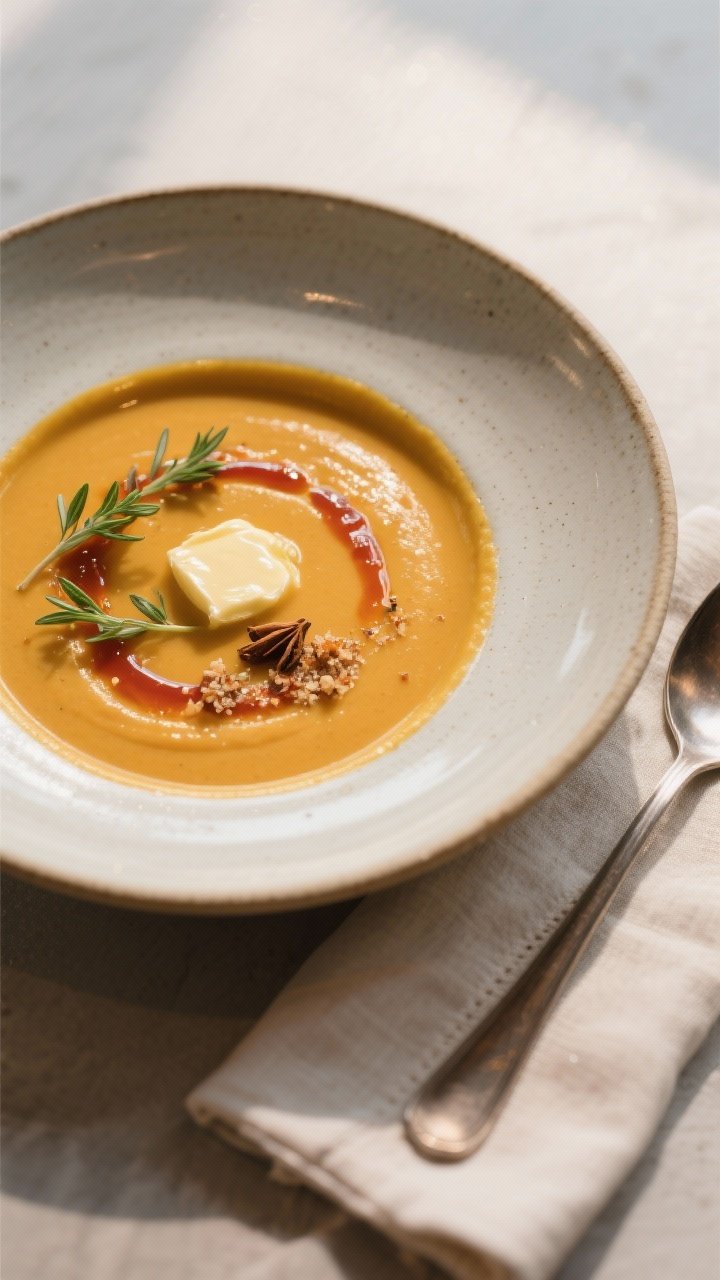
- Butter (1 tbsp, optional) – Stir in at the end for a glossy finish.
- Garnish – Toasted pumpkin seeds, crispy sage, swirl of cream, or chili oil.
Let’s Get Cooking – Instructions

- Preheat and prep the squash. Heat oven to 425°F (220°C).
Halve the squash lengthwise, scoop out seeds, and brush flesh with 1–2 tbsp olive oil. Season with salt and pepper. Place cut side down on a lined sheet.
- Roast for flavor. Roast 35–45 minutes until the skin wrinkles and a knife slides in easily.
Caramelized edges = big flavor. Let cool slightly.
- Sweat the aromatics. In a large pot, heat 1 tbsp olive oil over medium. Add chopped onion and a pinch of salt.
Cook 5–6 minutes until translucent and lightly golden. Add minced garlic and carrot or apple; cook 2–3 minutes until fragrant.
- Add herbs and spice. Stir in thyme, a pinch of cinnamon or nutmeg, and red pepper flakes if using. Toast 30 seconds to bloom the flavors.
- Scoop the squash. Using a spoon, scoop roasted squash flesh into the pot.
Discard skins. Stir to coat with aromatics.
- Pour in broth. Add 4 cups broth. Bring to a simmer and cook 10 minutes to let flavors mingle.
If too thick, add more broth.
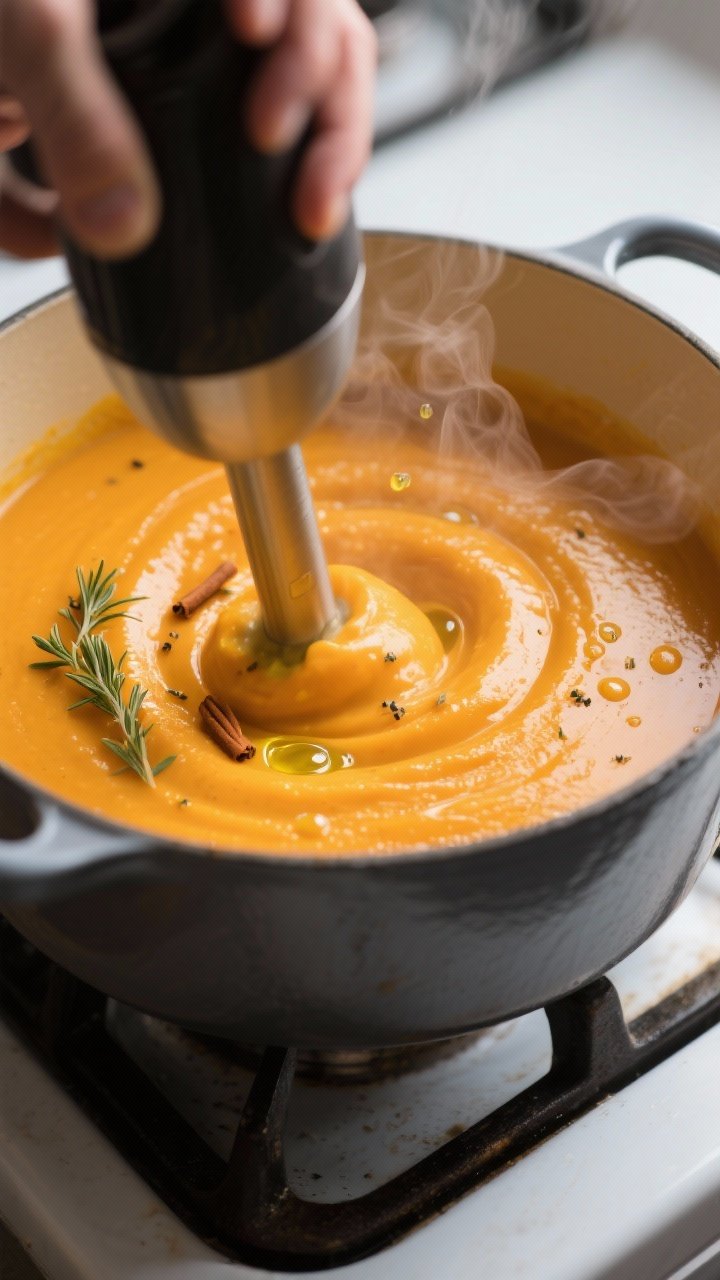
- Blend until silky. Use an immersion blender to purée until smooth. No immersion blender? Carefully transfer in batches to a countertop blender, venting the lid to release steam.
- Finish like a pro. Stir in cream or coconut milk.
Add lemon juice or vinegar, then taste. Adjust salt, pepper, and acid. For extra luxury, swirl in the butter.
- Garnish and serve. Ladle into bowls.
Top with toasted pumpkin seeds, crispy sage, a drizzle of cream, or chili oil for drama. Serve with crusty bread, obviously.
Storage Instructions
- Fridge: Cool completely, then store in airtight containers for 4–5 days.
- Freezer: Freeze up to 3 months. Leave room in containers for expansion.
Thaw overnight in the fridge.
- Reheat: Warm gently on the stove over medium-low. If too thick, whisk in a splash of broth or water. Avoid boiling after adding cream.
Benefits of This Recipe
- Beginner-proof. Roasting and blending cover a multitude of sins.
You’ll look like you know what you’re doing (because you will).
- Nutrient-dense. Squash is rich in vitamins A and C, plus fiber. Comfort food that secretly does your body a favor? Yes.
- Budget-friendly. One squash, a few pantry staples, big yield.
Meal prep win.
- Flexible base. Keep it classic, make it spicy, go Thai-inspired—you can pivot quickly.
- Freezer-friendly. Make once, eat well all week. Your future self says thanks.
Common Mistakes to Avoid
- Skipping the roast. Boiling raw squash works, but you’ll miss the caramelized depth. Roast for the glow-up.
- Under-seasoning. Squash is sweet; it needs salt and a touch of acid to taste balanced, not flat.
- Adding all the liquid at once. Start with less.
You can thin a thick soup; you can’t un-water a watery one.
- Over-spicing. Cinnamon and nutmeg are power tools. A pinch adds warmth; a teaspoon makes it taste like pie filling. Don’t.
- Blending carelessly. Hot liquids expand.
Vent the blender lid and blend in batches to avoid a Jackson Pollock moment on your ceiling.
Mix It Up
- Thai-ish twist: Add 1–2 tbsp red curry paste when sautéing aromatics; finish with coconut milk and lime juice. Top with cilantro.
- Smoky bacon version: Render 3–4 slices chopped bacon first; sauté onions in the fat. Finish with a crumble of crispy bacon.
- Apple + sage: Use apple instead of carrot and add crispy sage leaves on top.
A tiny drizzle of maple syrup? Chef’s kiss (tiny!).
- Protein boost: Stir in a can of drained white beans before blending for creaminess and extra protein. No one will know—sneaky good.
- Spicy fall: Add 1 tsp chipotle in adobo for smoky heat.
Balance with a little extra cream.
FAQ
Do I have to peel the butternut squash?
Nope, not for roasting. Halve it, roast cut side down, then scoop the flesh. If you cube and sauté the squash raw, then yes, peel it first.
Can I make it dairy-free?
Absolutely.
Use olive oil instead of butter and swap cream for full-fat coconut milk. It’s luscious and IMO just as good.
What if I don’t have an immersion blender?
Use a regular blender in batches. Fill it halfway, vent the lid, cover with a towel, and blend until smooth.
Return to pot and continue.
How do I thicken a too-thin soup?
Simmer uncovered to reduce, or blend in a small cooked potato, extra roasted squash, or a handful of white beans. Easy fix.
Can I make this ahead for a dinner party?
Yes. Make up to 2 days in advance, refrigerate, and reheat gently.
Add the cream and acid right before serving to keep it bright and silky.
What’s a good garnish if I have nothing fancy?
Olive oil drizzle, cracked black pepper, and a pinch of flaky salt. If you’ve got yogurt, a quick swirl looks pro and tastes great.
Is it okay to skip the carrot or apple?
Totally fine. They add sweetness and body, but the soup will still be excellent without them.
Taste and adjust seasoning as needed.
My Take
This is the kind of recipe that makes beginners feel unstoppable and veterans feel smug. The technique—roast, sauté, blend, balance—works on repeat across a dozen soups, so you’re learning more than just dinner. Keep the seasoning bold, don’t skimp on the acid, and garnish like you mean it.
And if anyone asks how long you worked on it, just smile and say, “Long enough.”
Printable Recipe Card
Want just the essential recipe details without scrolling through the article? Get our printable recipe card with just the ingredients and instructions.