Quick Teriyaki Salmon Bowl (Sticky, Sweet & 35g Protein in 20 Minutes) That’ll Make Takeout Jealous
If dinner takes longer than your attention span, it’s already lost. This bowl? Lightning-fast, ridiculously flavorful, and the kind of sticky-sweet that makes you “sample” five times before plating.
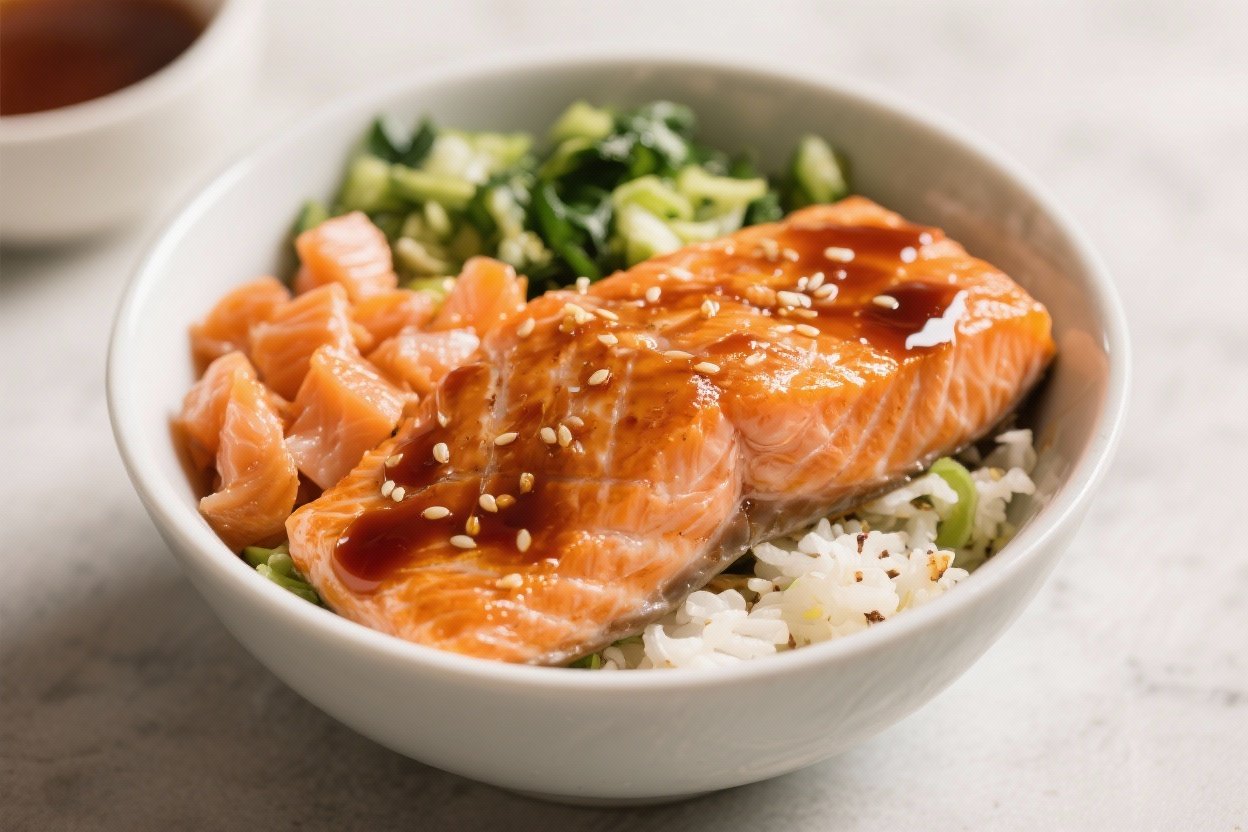
You’ll get crisp-edged salmon glazed in a shiny teriyaki sauce that actually clings, not slides off like a bad handshake. Toss it over fluffy rice with crunchy veggies, and you’ve got a high-protein meal that looks like a $16 bowl and costs half. Weeknight win, wallet win, taste bud riot.
Why This Recipe Works
Balanced flavor: Sweet, salty, umami, and a touch of tang—this sauce hits every note and makes salmon taste like restaurant-level magic.
Sticky glaze science: Cornstarch thickens quickly so the sauce clings to the salmon instead of puddling at the bottom of the bowl.
That’s the dream.
High protein, low effort: Each serving delivers around 35g protein from salmon without a complicated ingredient list or long marinating time.
Speed: Pan-searing builds caramelization fast; finishing with the sauce locks in flavor in under 20 minutes. Because you’ve got better things to do than babysit a pan.
Ingredients
- For the salmon:
- 1 lb (450 g) salmon fillet, skinless, cut into 1-inch cubes
- 1 tablespoon neutral oil (avocado, canola, or grapeseed)
- 1/2 teaspoon kosher salt
- 1/4 teaspoon black pepper
- For the teriyaki sauce:
- 1/4 cup low-sodium soy sauce
- 2 tablespoons mirin (or sub 1 tbsp rice vinegar + 1 tsp sugar)
- 1 tablespoon honey (or brown sugar)
- 1 tablespoon rice vinegar
- 1 teaspoon toasted sesame oil
- 2 cloves garlic, minced
- 1 teaspoon fresh ginger, grated (or 1/4 tsp ground ginger)
- 1/2 cup water
- 2 teaspoons cornstarch
- Optional: pinch of red pepper flakes for heat
- For the bowl:
- 2 cups cooked jasmine or short-grain rice (hot)
- 1 cup cucumber, thinly sliced
- 1 cup steamed or sautéed broccoli or edamame
- 1/2 avocado, sliced
- 2 green onions, thinly sliced
- 1 tablespoon toasted sesame seeds
- Lime wedges (optional, but clutch)
Let’s Get Cooking – Instructions
- Prep the sauce base: In a small bowl, whisk soy sauce, mirin, honey, rice vinegar, sesame oil, garlic, ginger, and red pepper flakes if using.
- Make a slurry: In another cup, stir water and cornstarch until smooth. No lumps—this is your glossy glaze insurance.
- Season the salmon: Pat salmon dry with paper towels.
Toss with salt and pepper. Dry fish equals better sear. Science.
- Sear time: Heat a large nonstick or stainless skillet over medium-high.
Add oil. When it shimmers, add salmon in a single layer. Don’t crowd.
Sear 2–3 minutes until edges are golden.
- Flip gently: Turn cubes and cook another 1–2 minutes. They should still be slightly translucent in the center—no cardboard salmon here.
- Sauce it: Reduce heat to medium. Pour in the sauce base and simmer 30 seconds.
- Thicken: Stir the cornstarch slurry, then drizzle it in while stirring.
Sauce will go from thin to glossy in about 60–90 seconds. Coat the salmon gently.
- Finish: Remove from heat as soon as the sauce is sticky and clings to the fish. Overcooking now will make the salmon dry and the sauce gummy.
Resist.
- Assemble: Add hot rice to bowls. Top with cucumbers, broccoli or edamame, avocado, and teriyaki salmon. Spoon extra sauce over the rice (the best part).
- Garnish: Sprinkle green onions and sesame seeds.
Squeeze lime over the top for a cheeky pop of acid. Serve ASAP.
Storage Instructions
- Fridge: Store salmon and rice/veg separately in airtight containers for up to 3 days. Keep avocado fresh by adding just before serving.
- Reheat: Microwave the salmon in short bursts (30–45 seconds) or warm gently in a skillet over low heat with a splash of water to loosen the glaze.
Don’t nuke it to oblivion.
- Freezer: Cooked salmon can be frozen up to 2 months, but the glaze texture softens when thawed. Freeze without cucumber/avocado; add fresh when serving.
- Meal prep tip: Store sauce separately; reheat and toss with salmon right before eating for the best texture.
Health Benefits
- High-quality protein: Around 35g per serving to support muscle repair and satiety. This bowl keeps you full without the food coma.
- Omega-3 fats: Salmon delivers EPA and DHA for heart, brain, and anti-inflammatory benefits.
Your joints will clap.
- Lower sugar, balanced sodium: Using low-sodium soy sauce and honey keeps things flavorful without the spike-and-crash of sugary takeout sauces.
- Fiber and micronutrients: Veggies like broccoli, edamame, and cucumber add fiber, vitamin C, K, folate, and potassium. It’s not just delicious—it’s functional fuel.
What Not to Do
- Don’t overcrowd the pan: Crowding steams the salmon and blocks browning. Work in batches if needed.
- Don’t add cornstarch dry: It will clump instantly.
Slurry first, always.
- Don’t over-reduce the glaze: Too thick in the pan means paste on the plate. Pull it when it’s glossy and flowing slowly.
- Don’t skip drying the salmon: Moisture kills sear and flavor. Paper towels are your friend.
- Don’t use high-sodium soy sauce without adjusting: It’ll taste like the ocean.
If that’s your vibe, okay—but IMO, go low-sodium.
Different Ways to Make This
- Air fryer method: Toss salmon with a teaspoon of oil, salt, pepper. Air fry at 400°F (205°C) for 6–8 minutes, shaking halfway. Meanwhile, simmer and thicken the sauce in a saucepan, then toss together.
- Sheet pan version: Broil salmon cubes on a foil-lined sheet 5–7 minutes.
Simmer and thicken the sauce separately; glaze and broil 1 more minute for caramelized edges.
- Gluten-free: Use tamari or coconut aminos and ensure your mirin and cornstarch are GF-certified.
- Low-carb swap: Serve over cauliflower rice or a crunchy slaw mix. Still sticky-sweet, fewer carbs.
- Spicy upgrade: Add sriracha or gochujang to the sauce and finish with chili crisp. You’ve been warned.
- Crispy skin option: Use skin-on fillets; sear skin-side down until crisp, flip briefly, then glaze.
Serve over rice with skin shards for crunch. Fancy much?
FAQ
Can I use frozen salmon?
Yes—just thaw fully in the fridge overnight and pat very dry. Frozen salmon can retain extra moisture, so drying is crucial for browning.
What can I use instead of mirin?
Mix 1 tablespoon rice vinegar with 1 teaspoon sugar for each tablespoon of mirin.
Apple cider vinegar works in a pinch, but rice vinegar tastes cleaner.
How do I prevent the sauce from getting gummy?
Use the correct cornstarch-to-liquid ratio and add the slurry gradually. Remove from heat once glossy and thick enough to coat a spoon; it will thicken slightly more off-heat.
Is this spicy?
Only if you add the optional red pepper flakes or hot sauce. The base recipe is sweet-savory and kid-friendly.
Can I make it ahead?
You can cook the salmon and sauce up to 2 days ahead and store separately.
Reheat gently and assemble with fresh toppings for the best texture and flavor.
What rice works best?
Jasmine or short-grain white rice gives the most satisfying, sticky base. Brown rice or quinoa is great if you want extra fiber—just cook it well-seasoned.
How do I know the salmon is done?
It should flake easily with a fork and be opaque on the outside with a slightly translucent center. Target 125–130°F (52–54°C) for moist, tender salmon.
Wrapping Up
In 20 minutes, you’ll have a sticky-sweet teriyaki salmon bowl that hits every craving without wrecking your schedule—or your macros.
The glaze is glossy, the salmon is tender, and the toppings bring crunch and creaminess so every bite slaps. Keep this on repeat for weeknights, meal prep, or whenever takeout tries to tempt you. FYI: leftovers are elite, but you might not have any.
Printable Recipe Card
Want just the essential recipe details without scrolling through the article? Get our printable recipe card with just the ingredients and instructions.